

When Career Becomes Identity
Having dinner with Esther Perel, on friction — and what I wore while thinking about it.

ON ‘CHINAMAXXING’
Having been celebrating Chinese New Year with friends and family the last few weeks, it’s been busy.
I was interviewed on ABC Radio National about what ‘Chinamaxxing’ is — you can listen to it here. I was interviewed by the esteemed foreign correspondence Nick Bryant which I was tentative about because he is a Serious Journalist, but as his producers told me, his Saturday Extra program is a favourite one of theirs to work on because there’s such a mix of subjects they cover. They cover Epstein, Andrew, and right before me had an interview with a New York Times journalist who interviewed Gisèle Pelicot. It’s a mix, which is what we all are. Smart, irreverent, topical. I like that.
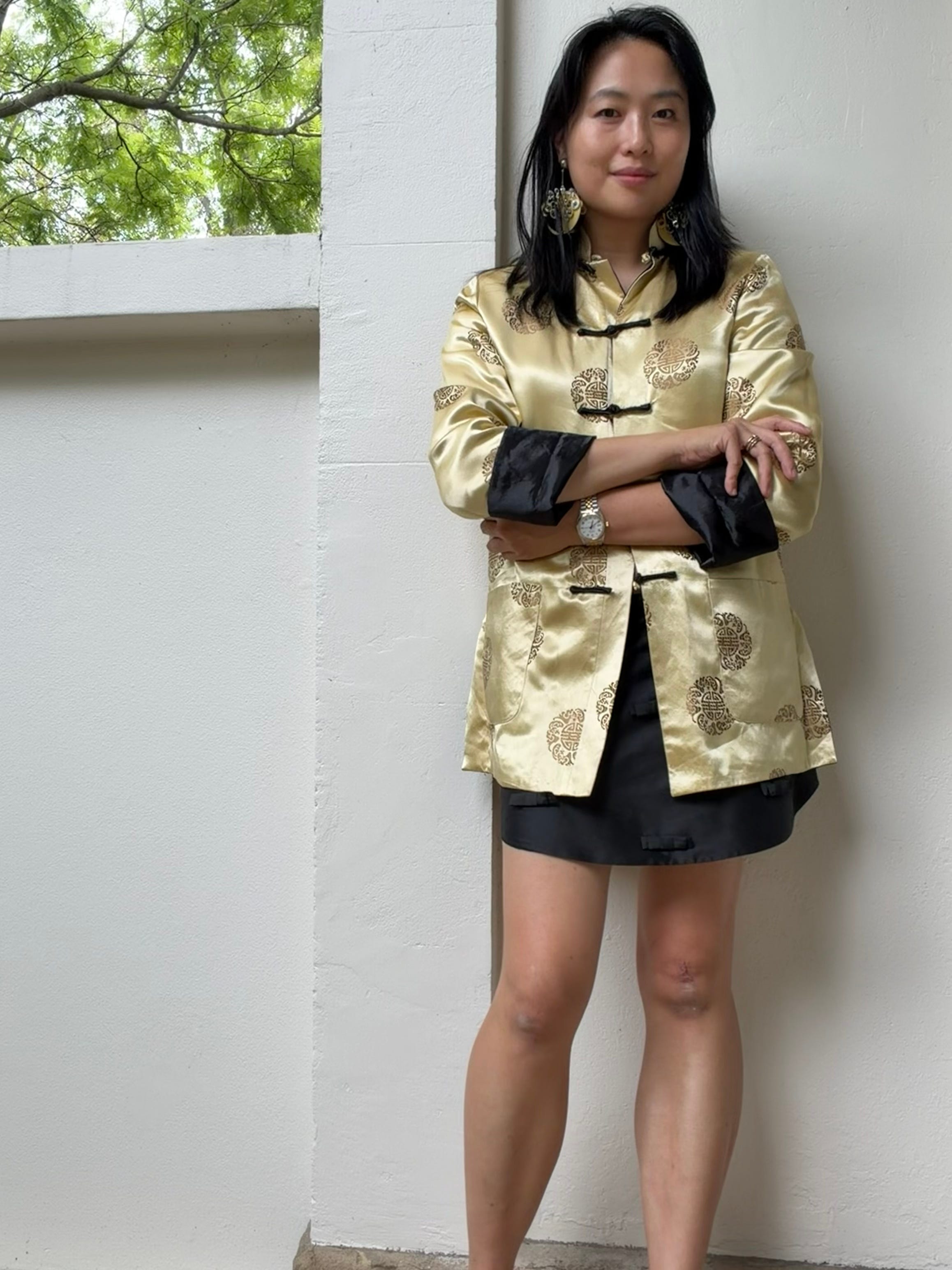
For a friend’s Chinese New Year celebrations, I borrowed my mum’s silk Tang jacket. It’s reversible — the underside is black. I wore it with a Australian brand Lovaan mini skirt (on sale), Toteme flats (can’t be seen obv) and Prada earrings.
ON WORK AND CAREER
This week I had dinner with Esther Perel hosted by Culture Amp.
I was starstruck.
And, even more so when she complimented me on my Sir skirt. See, we’re all different things — Esther is of course the world-recognised psychologist and she too likes nice clothes. (She wore a distinctive hand jewellery that went around her wrist and then looped onto a finger.)
And then starstruck again because Leigh Sales was seated next to her (Leigh! As witty and clever and modest as you would imagine!)
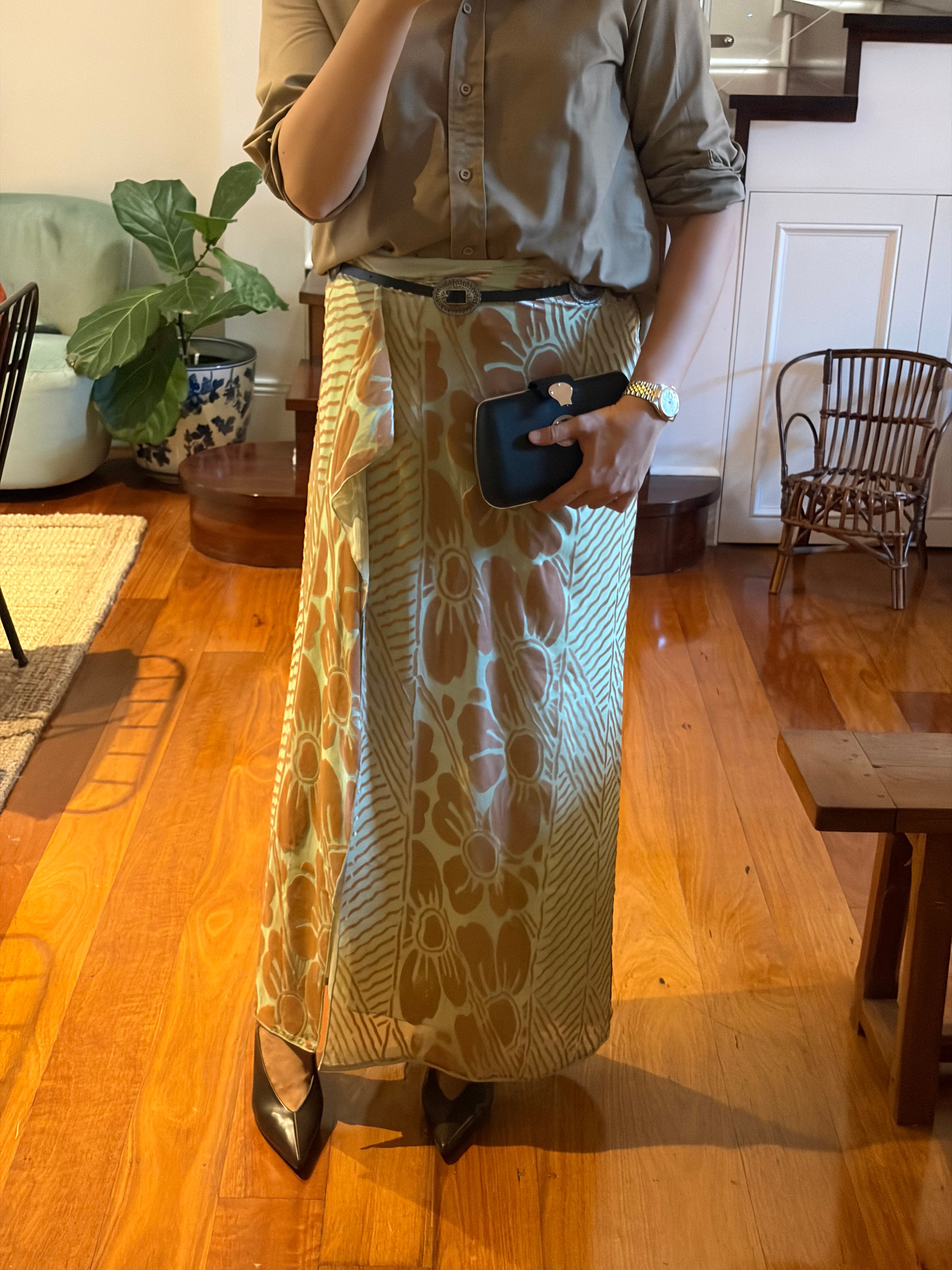
Skirt is from Australian brand Sir. Bag is Ralph Lauren Collection, shirt is my mum’s, shoes are from Camilla & Marc, belt is from Lauren by Ralph Lauren, a relatively underrated diffusion line that no one really seems to talk about. The shoes are dark chocolate brown, which is an excellent heel colour to have when you need a darker shoe but isn’t as heavy as black.
Over an intimate dinner last night at Sydney’s Chiswick restaurant, Esther Perel reminded us that work is fundamentally about relationships.
She asked us:
How many jobs had our grandparents had?
How many jobs did our own parents have?
And, how many jobs did we each have just in the last decade?
The point was made clear very quickly. Most of us have had more roles in ten years than our grandparents had in a lifetime — and many of us are focusing on work rather than other life moments and milestones.
Work is taking up so much more of our lives, and our relationships at work are more important than ever. As Esther says, work used to be about survival, duty and financial stability, but nowadays, we look to our careers for identity, belonging, fulfilment and self-worth (as she says in this podcast). It’s a lot to ask. Which is fine — but it’s good to be aware of it, and it’s a lot to ask from a job. Professional disappointment is no longer just confined to office hours, but it’s existential.
The dinner was in collaboration with Culture Amp, the Australian workplace experience platform. Together, Esther Perel and Culture Amp have launched a 100-question card set designed to spark reflection at work — prompts like:
“The career advice that I’m glad I never took was…”
“My inner critic always says…”
“What is the best part of your day?”
We each shared stories that were prompted by the cards. What is said at the table, stays at the table.
I sat next to the co-founder and executive chair of Culture Amp, Didier Elzinga. He used to be the CEO and is now executive chair; Didier asked me what brought me there — other than Esther, of course.
I explained that I am a work-centric person, to use Suzy Welch’s terminology (rather than ‘workaholic’ — which has more negative connotations). I like working. I like having a career. I’ve made peace with this. I joke about it. I’ve also come around to not relying on the shorthand of saying where I used to work to define myself. Conversely, I have also had difficulty now working for myself to say the words “I am a writer with a newsletter, and a brand consultant specialising in copy, content and brand marketing.” Identity is complicated.
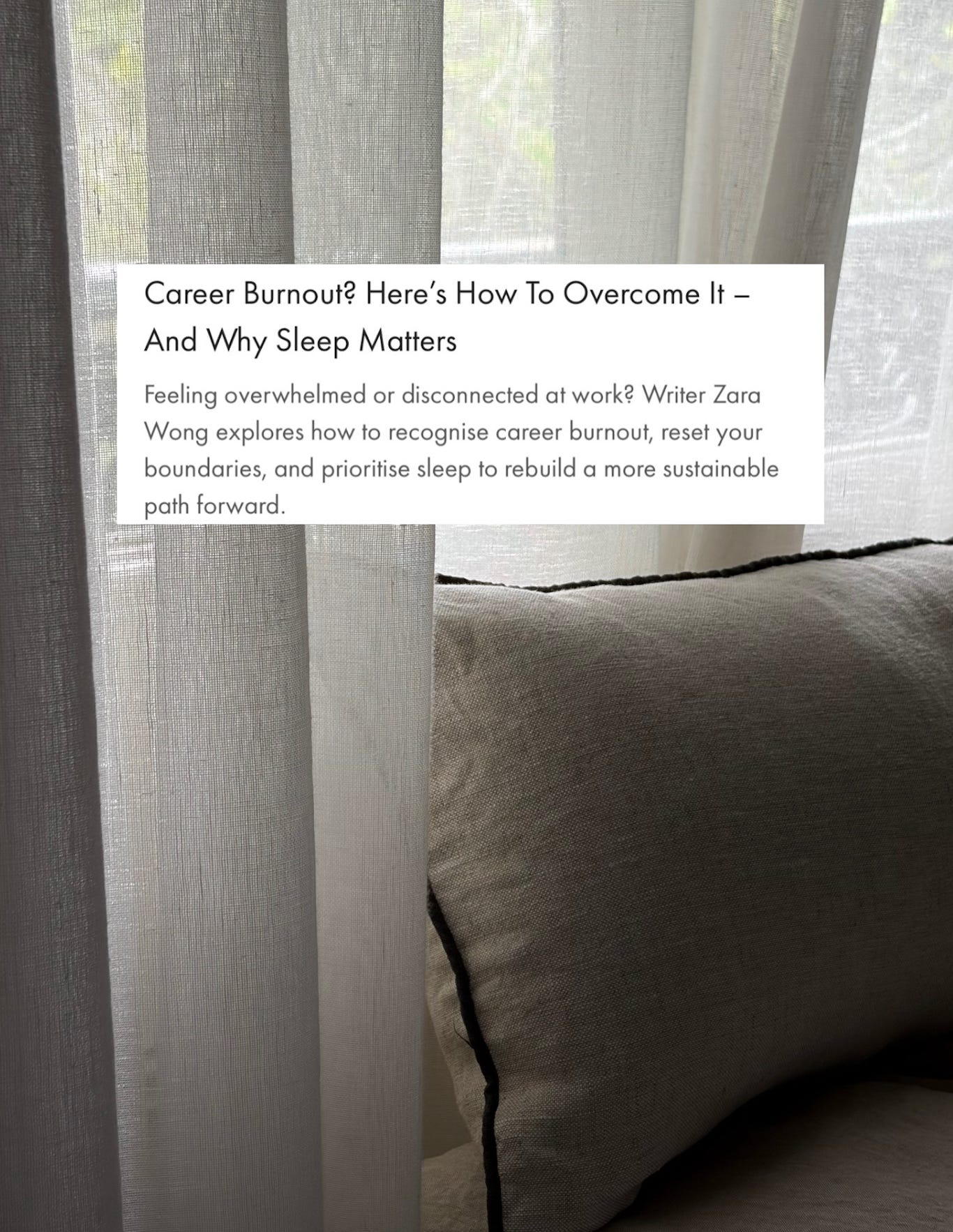
In a midst of this, I have had career burnout on and off, which I wrote about for Bed Threads recently. I’m not sure if one ever can completely cure themselves from burnout, but I think now at least I can see when it’s about to happen.
Towards the end of the evening, someone asked Esther what is bad therapy. Of course you have to find the right fit, but, it’s not necessarily going for a style that you would feel comfortable with. As she says “If you love to talk, you should not do talk therapy. If you are very active and move around, you need to sit still and don’t do anything for two minutes.”
The point being, there needs to be friction to grow. It’s something we all need to be reminded of — and with those who are familiar with her work, we know that she thinks friction is a good thing. In romantic relationships, she urges couples to look at the form of conflict rather than just the content. At work, perhaps we need to do the same.
As I wrote about for the Bed Threads article, each visceral reaction we have to something — good or bad — is data. It tells us something about ourselves before it gets mediated by externalities or ‘what is the right thing to do’.
I always think to myself how you need to shake things up to stretch and test the brain. Even little things like driving down different streets to familiar destinations, or reading writing from opinions that I don’t necessarily agree with, or reading about topics or people that I don’t see the appeal of.
Frictions build resilience and tell you something more about yourself and how you want to interact with the world. It’s proof that we’re still here — and, still growing.
Great to have you on the programme Zara. And thanks for calling me a serious journalist rather than a veteran journalist.
That would’ve been a fascinating dinner. I recently listened to Esther Perels fashion neurosis episode which was a totally different aspect to hear her talk about. I struggle with wanting to be a work centric person but also wanting to be a family centric person. I love working yet feel like work can let you down sometimes (redundant) and to be truely exceptional in my industry you need to sacrifice family time